


Community Spotlight
-
Nakhon Pathom School of the Deaf
-
Asia-Pacific Center on Disability
Immersive Learning at
Nakhon Pathom School of the Deaf
Nakhon Pathom School of the Deaf was a huge highlight of my study mission experience. First — let's appreciate the diversity that reigns within this school; the demographics feature a total of 190 students over 40 provinces coming from various backgrounds!
Passionate about asset-based community development, I was intrigued by the way that the education system for the youth deaf community is structured here. What surprised me was the fact that the curricular was very all-rounded not just in terms of academia but life skills and personal development. All of these elements complement well with one another, in such a way that the students are able to learn in such a holistic and all-inclusive environment. This was in accordance to the Khok Nong Ka, also known as the Sufficiency Economy Philosophy (SEP).
In my perspective, while Singapore is more focused on shared social responsibility for the community, Thailand's focus is on empowering people with disabilities (PWDs) to be more independent and self-sufficient.
Some other fun facts I learnt about Nakhon Pathom School of the Deaf include inclusive companies sponsoring the school's equipment, specifically Pandora Thailand.


Sustainability as a Way of Life
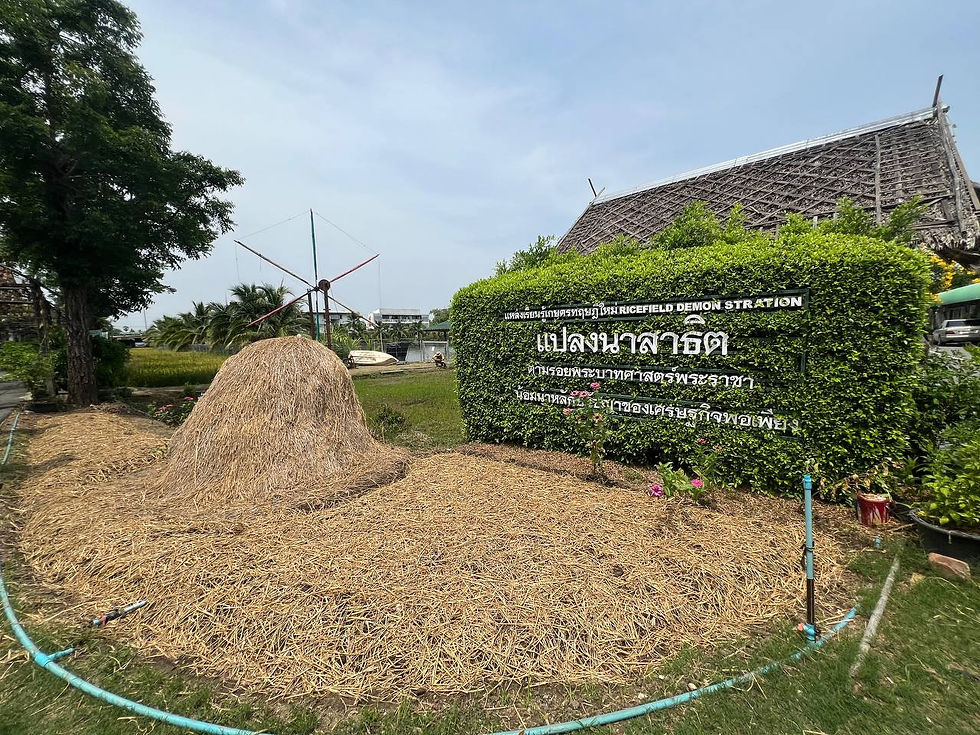
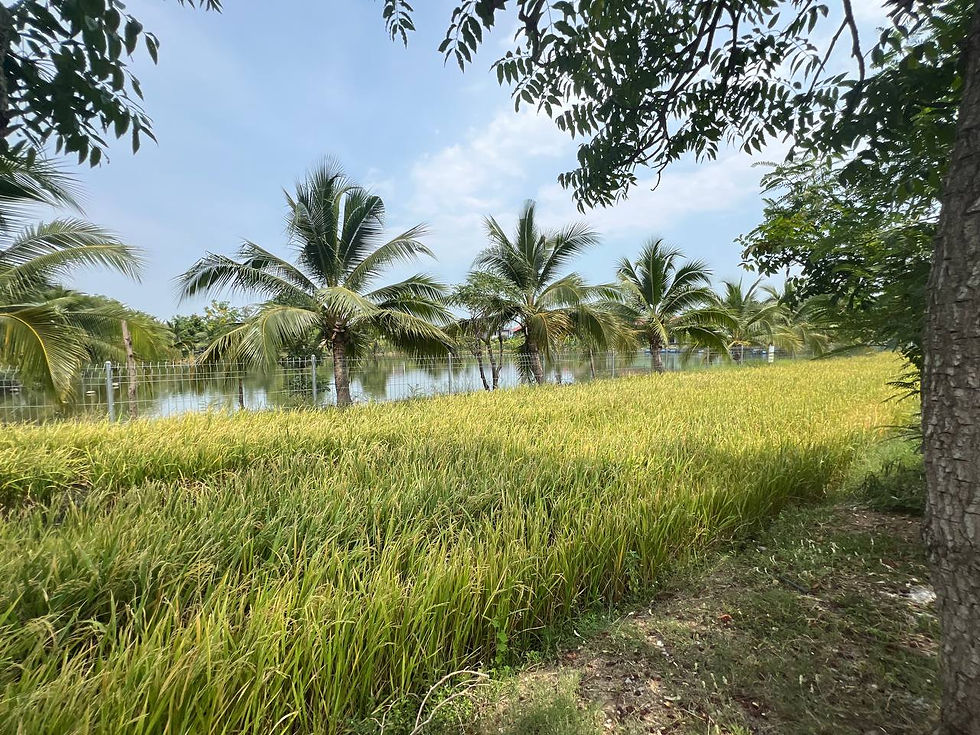
Apart from inclusion, I was surprised that sustainability is well-integrated in the way of life of the school community, even more so than in Singapore. This includes the agricultural activities and programmes that are offered by the school. Specifically, fundamental learning includes 5 key components that is centered on sustainability. This is namely: Rak Mae Phosop - learning about farming, Rak Ban - filling fresh air into the pond, Mi Fai - Converting sunlight into energy via the solar cells, Tamgasi - Operational Management of soil, water and ecosystem protection from flood and drought and lastly, Raksa - growing mushroom for maintenance.
Why is sustainability such a significant element? One thing I learnt from my Thai friend was the 30/30/10 rule by King Ramayana; that everything happens in a cycle, a similar concept to the Tri Hita Karana I learnt about in my Bali study mission. This can be seen where large facilities of chicken coops are situated in the school, specialized to have its excrements to be fed to the fishes in the pond.
My Thai Sign Language Name: 🤓👄
As I delved into the intricacies of Thai sign language, I was impressed by the unique practice of assigning sign language names based on appearance. My playful Thai sign language name highlighted my nerdy glasses and smiley demeanor! It was a small yet profound gesture that instantly bridged communication barriers and fostered a sense of camaraderie.
We then rolled up our sleeves and joined the locals in cooking up a rendition of Singapore's famous Chicken Rice. While my culinary skills are not equivalent to that of a masterchef, I had great joy in bonding with the locals.
As the day unfolded, we found ourselves swept up in a whirlwind of workshops and activities. From crafting herbal drinks to mastering the art of flower-pressed bag making, I was deeply engrossed in the process of craftsmanship and awestruck at the creativity of these students.

Asia-Pacific Center on Disability



Asia-Pacific Center on Disability: Empowerment. Inclusion.
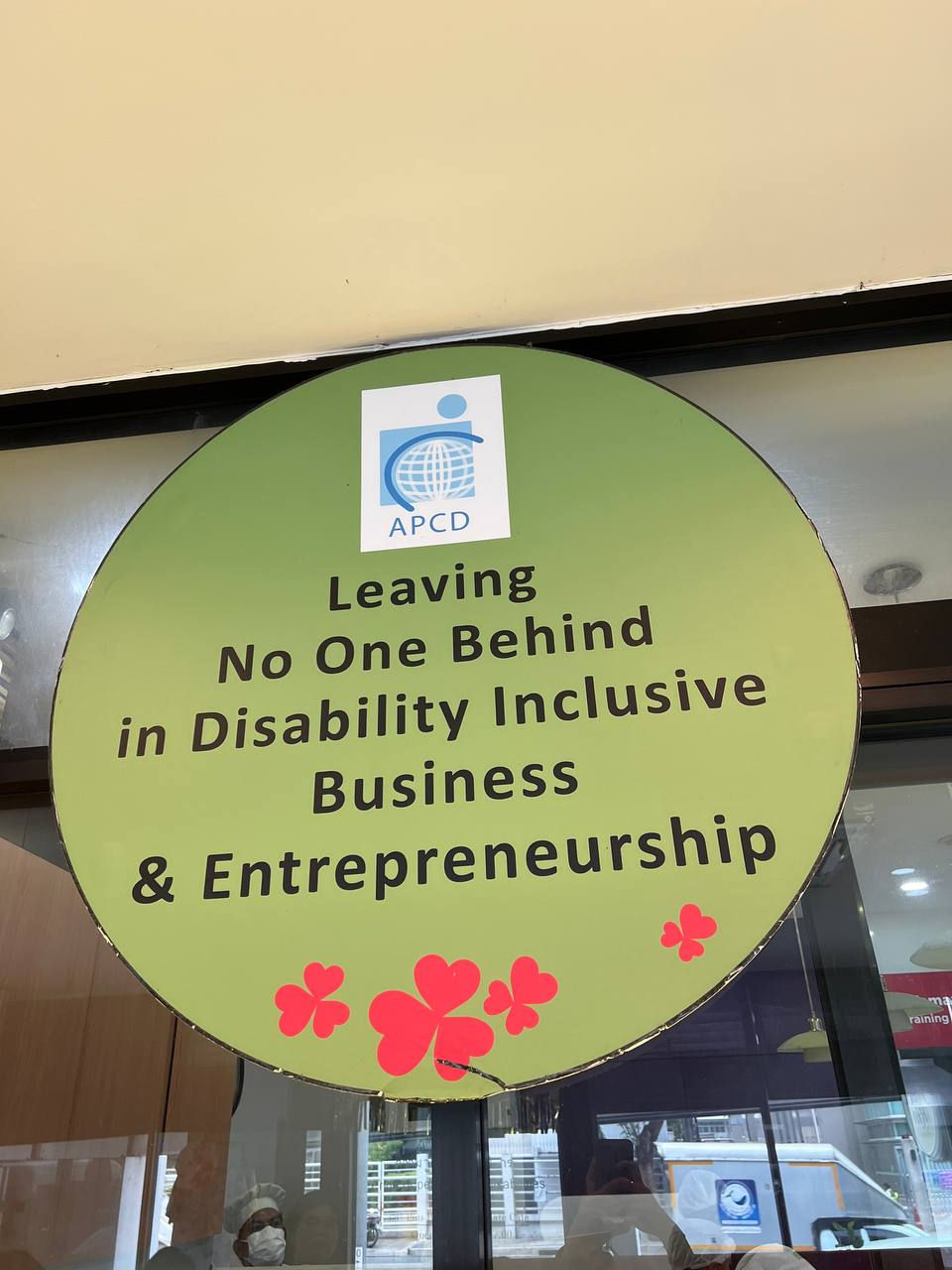
Asia Pacific Center for Disability (APCD) drives on the model of empowerment and inclusion, providing holistic support for people with disabilities (PWDs).
Through strategic partnerships and innovative initiatives, APCD has become a beacon of hope and a model for disability inclusion across the region. One of the key figures in this journey is MarkRin, a dedicated partner with APCD. Additionally, APCD also forged a strong bilateral partnership between Japan and Thailand, focusing on disability inclusion. This collaboration has led to impactful projects, one of which is the renowned 60 Plus+ Bakery, established in partnership with Yamazaki.
The 60 Plus+ Bakery is more than just a business; it's a symbol of respect and honor. Named in celebration of a royal milestone—the 60th birthday of a Thai princess—the bakery stands as a tribute to her legacy and commitment to disability inclusion. This initiative is deeply rooted in the values of attitude, belief, and continued commitment, embodying the ABCs that drive APCD's mission. Support for ABC at APCD manifests through two primary wheels: empowerment and inclusion, forming the foundation of a circular economy.
Unlike traditional medical models, APCD adopts a holistic approach, viewing PWDs as complete human beings. This life-cycle approach encompasses health, education, livelihood, social integration, and employment.
APCD champions fair employment, empowering PWDs to run their own businesses and maintain sustainable livelihoods. This entrepreneurial spirit is at the core of APCD's philosophy, promoting independence and self-sufficiency. By focusing on these areas, APCD ensures that PWDs are not only included but are active contributors to their communities, breaking down barriers and fostering a more inclusive society.